
Moving to France as a UK expat can be an exciting prospect. The tax system, however, is where many people come unstuck.
French income tax returns are not inherently complicated, but they are very easy to get wrong, particularly if you have UK income. And when they are done incorrectly, the usual outcome is simple: you pay more tax than you need to.
Unlike the UK’s PAYE system, where tax is largely handled for you, France operates a declarative system (even where tax has already been taken at source). The responsibility sits firmly with you as the taxpayer. You must report your income correctly, and the authorities expect you to get it right.
The good news is that, with the right structure and a clear understanding of the rules, the process is manageable. This article provides a practical overview of what UK expats in France need to know when completing their French income tax return.
Of course, it is also important to acknowledge that everyone’s situation is different and unique, and that tax rules can be complex, particularly when cross-border income is involved. Our team here at Kentingtons strongly recommends that you consult a qualified professional about your specific circumstances, as an article like this one cannot be treated as personalised advice.
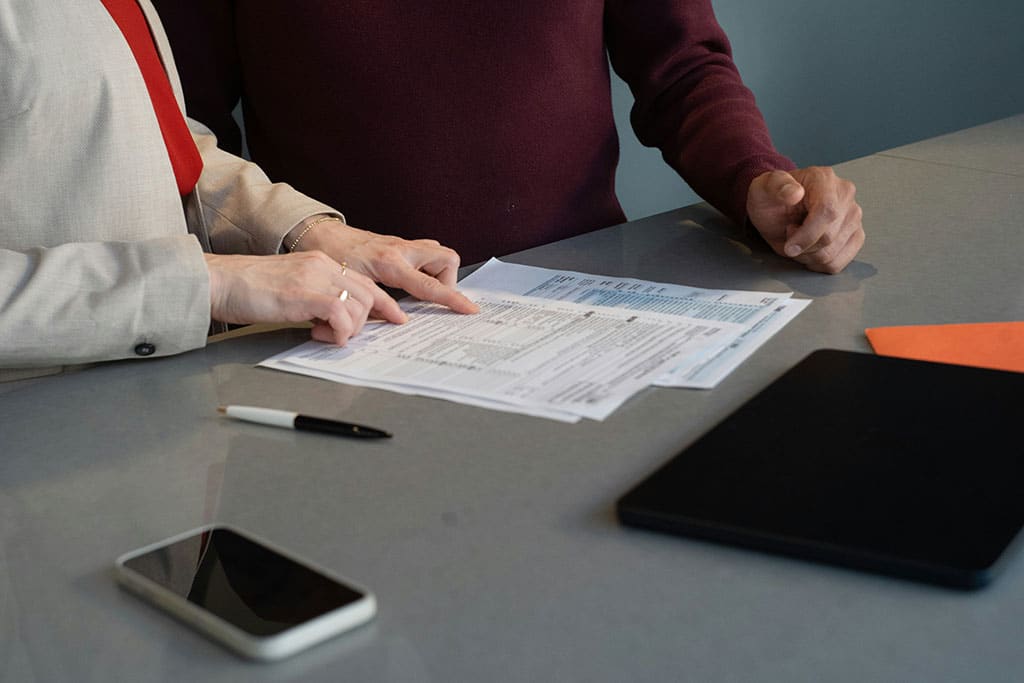
Do I Need to File a French Tax Return?
If you are a French tax resident, you will generally need to file a return every year, even if your income is low or even nil.
In broad terms, French tax residency applies if France is your main home or if you spend more than 183 days there in a year, although other criteria can apply.
This obligation catches many UK expats off guard. Even if your income comes entirely from the UK, such as a UK state pension or rental income, you are still required to declare it in France.
If you are filing a tax return in France for the first time, you will not automatically receive forms in the post. Instead, you’ll need to register with your local tax office (centre des impôts) or create an account and file online at impots.gouv.fr.
New arrivals’ first tax return in France will typically cover only the portion of the calendar year they were resident in France, rather than the full 12 months.
Which French Tax Forms Do I Need to Complete?
The French tax office uses a modular system based on a main form, with supplementary ones as needed. Here is a straightforward rundown:
- Form 2042 is the core declaration that everyone files. This is where you report your overall income and household situation.
- Form 2042C is used for additional types of income, certain investments, or to claim specific tax credits or reductions. Your adviser can confirm whether you will need this complementary form.
- Form 2047 is particularly important for UK expats. Any income arising in the UK, including pensions, dividends, rental income, and/or bank interest, must be declared here first before being carried over to the main 2042 form.
- Form 2044 is for income from rental properties (in France or abroad, depending on the situation).
If you file online, the system will often pre-populate information from previous years, which makes the process significantly easier.
How Do I Declare Foreign Income and Which Exchange Rate Should I Use?
This is one of the most misunderstood areas of the French tax system for UK expats.
All foreign income must be declared in euros. This means converting each payment received in sterling.
Strictly speaking, the rules require you to use the Banque de France exchange rate on the exact date each payment is received. Historical rates are available via the Banque de France.
In practice, however, many local tax offices accept a consistent annual average rate. The key point is consistency. Whatever method you use, it must be applied reasonably and be justifiable if questioned.
Different types of UK income are not treated the same way under the UK-France double tax treaty. State pensions, private pensions, dividends, and rental income all have different rules.
This is an area where assumptions often lead to errors, and those errors can be expensive.
Do I Need to Declare My UK Bank Accounts to the French Tax Authorities?
Yes, without exception.
If you are a French tax resident and have signing authority on any non-French account, you must declare it each year. This includes:
- UK current accounts
- Savings accounts
- Premium Bonds
- Online accounts such as PayPal
The declaration is made using Form 3916 or its online equivalent.
This is not about declaring balances. It is about declaring the account’s existence.
Failure to declare can result in a fine of €1,500 per account per year, rising to €10,000 in certain cases. It can also trigger wider investigations and extend the tax authority’s look-back period.
This is one of the most common and avoidable mistakes we see.
When Is the Deadline for Filing a French Tax Return?
Deadlines vary each year slightly and depend on how you file and where you live.
- Paper returns are usually due in mid-May
- Online filing opens in early April and runs to late May or early June, depending on your département
Deadlines are published each year on impots.gouv.fr, and it is worth checking them early.
Missing the deadline will normally result in penalties, so it makes sense to prepare well in advance.
Can I Reduce My French Tax Return, and When Should I Start Planning?
The tax return itself is mainly about accurate reporting. Effective tax planning happens throughout the year, not just in April or May.
France taxes the household (foyer fiscal) rather than individuals. This system divides income by the number of “parts” in the given household. Such an arrangement can significantly lower a British expat’s effective tax rate if they have a spouse/partner and/or dependent children in full-time education. In some cases, elderly relatives living in the same household can also add “parts”, thereby further driving down the tax bill.
Other common reliefs include deductions for certain rental property expenses and credits for ecological home improvements.
UK pension income is a common area of confusion. The double tax treaty dictates that the UK state pension is normally taxable only in France (after a 10% allowance, subject to caps). Some government service pensions, meanwhile, may be declared in France, but taxable only in the UK. Treatment varies by pension type, underscoring the importance of a professional review.
Effective financial planning, encompassing pensions, investments, property, and estate matters, can bring profound benefits over time. At Kentingtons, we specialise in helping UK expats in France navigate these cross-border issues. We provide clear and practical advice on tax planning, the double tax treaty, pensions, and making sure you do not pay more than is strictly necessary.
Conclusion: We can help make your French tax obligations easier to deal with
French tax returns can understandably feel daunting at first, particularly with elements such as foreign income, exchange rates, and additional forms in the mix.
The good news, however, is that the filing of accurate tax returns in France is manageable if you have structured your finances correctly. Those people who have planned their finances to work efficiently in France will find that tax declarations become simple. Those who are determined to keep money and assets abroad, with no consideration for the legal reality, which is their tax status, will find French tax declarations a nightmare.
If you are looking to simplify your life, maximise opportunities, and avoid costly pitfalls, please talk to us. An initial consultation is at no cost and with no obligation. To make this consultation as valuable as possible, we ask you to complete a short, confidential questionnaire in advance. This allows us to review your information in advance and focus the discussion on what matters most: how we can help you, rather than on basic fact-finding.
Takes around 7 minutes to complete.
Initial consultation: Provided at no cost, subject to a minimum of €350,000 in liquid assets.